Growth strategies built for healthcare organizations
Patients compare more than procedure galleries. They look for recent, authentic feedback and signs that your practice listens. Create a transparent review strategy that supports confidence in your expertise, communication, and patient experience.
Help people find genuine perspectives on consultations, staff communication, scheduling, and follow-up care.
Maintain complete, consistent profiles on the platforms prospective patients use to research your practice.
Use a respectful response process that acknowledges concerns without revealing patient information.
From discovery to inquiry, authentic feedback adds useful context to a practice’s online presence.
A person finds your practice while researching facial plastic surgery options.
They read recent feedback about your team, office experience, and communication.
They consider the context of reviews alongside credentials, procedures, and consultation details.
Clear trust signals help patients decide whether to contact your office.
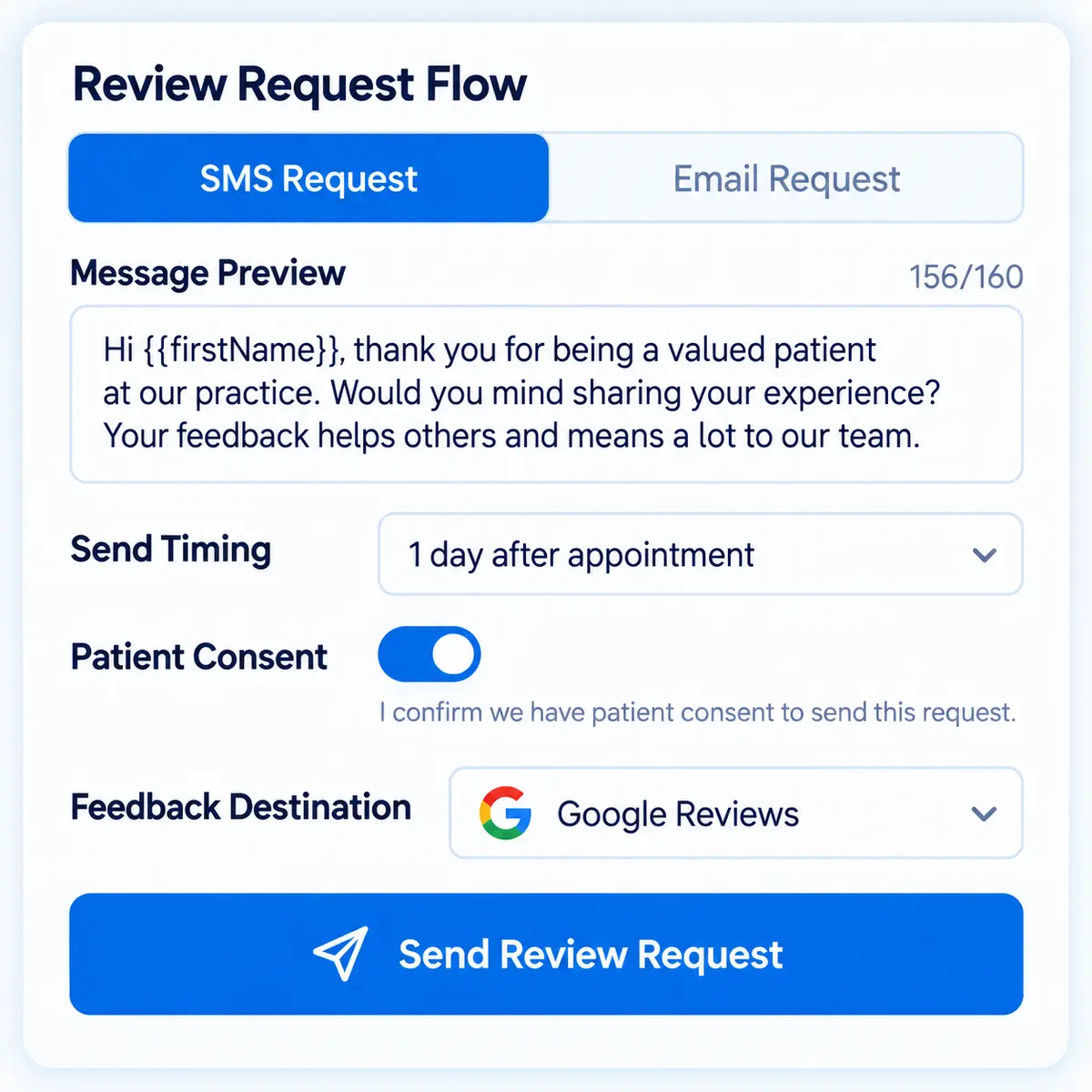
Establish consistent, neutral opportunities for all eligible patients to share honest feedback—without incentives or selective solicitation.
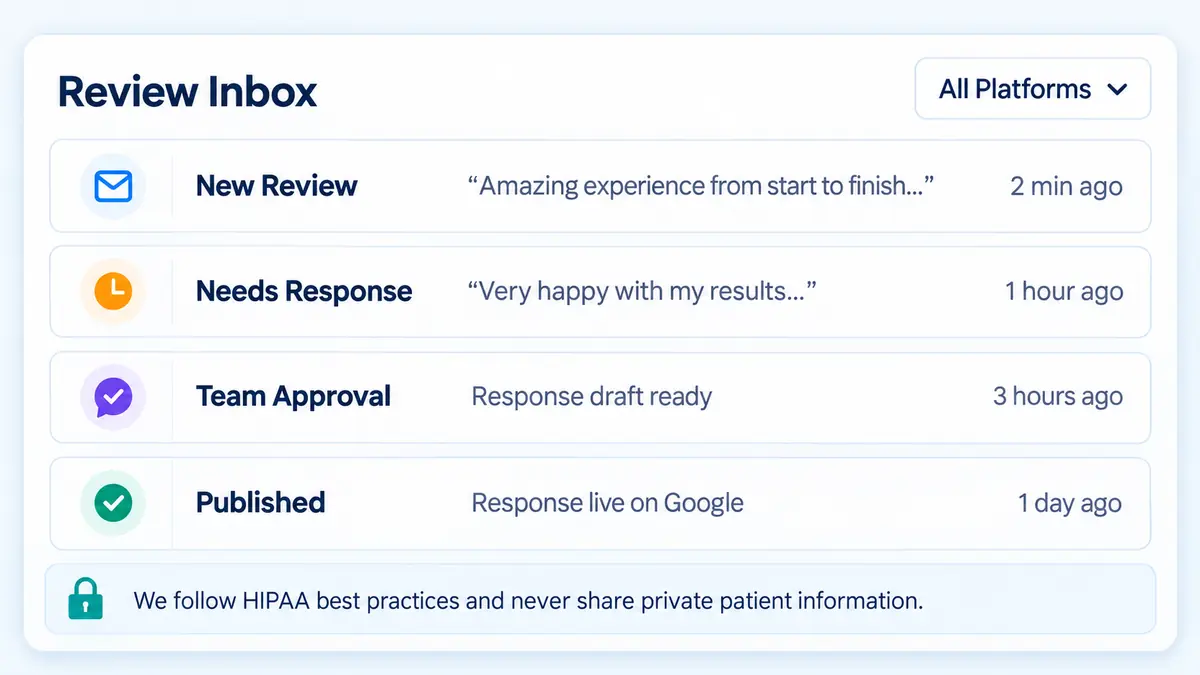
Keep track of public feedback on Google and other relevant directories, and identify posts that need attention.
Draft helpful, measured replies for practice approval. Avoid confirming anyone is a patient or discussing protected details.
Send sensitive concerns through a defined internal process for appropriate private follow-up.
Review locations, contact information, descriptions, and imagery for consistency across prominent listings.
Monitor review volume, response timeliness, recurring concerns, and operational themes rather than focusing only on star ratings.
Create a simple, consistent review request program that makes space for candid feedback.
Ask at suitable touchpoints using the same neutral approach for eligible patients.
Provide a direct, accessible path to the review platform, without suggesting what rating to leave.
Respect communication preferences and welcome positive, neutral, and critical reviews alike.
Use trends from feedback to identify opportunities across the patient experience.
Respond with discretion. Public comments are not the place to discuss private medical concerns.
Spot new feedback and flag urgent or sensitive comments for the right team.
Determine whether a public acknowledgment or an internal escalation is appropriate.
Have authorized staff review language before anything is posted publicly.
Reply professionally without confirming treatment, appointments, or other patient-specific information.
Recent and authentic feedback
Professional public responses
Consistent practice presentation
Patient experience insights
Accurate practice listings
Relevant location information
Consistent contact details
Clear website contact paths
A transparent process makes reputation management easier to coordinate and improve.
Evaluate public profiles, current feedback patterns, response practices, and local search touchpoints.
Establish inclusive review requests, approval rules, patient privacy safeguards, and escalation paths.
Configure workflows and document practical guidance for the team handling public responses.
Reviews can offer context about office communication, consultation experiences, scheduling, and follow-up. They should complement—not replace—research into credentials, procedure suitability, and a direct clinical consultation.
Yes. A response workflow can acknowledge concerns, route sensitive matters to authorized staff, and invite private communication when appropriate. Public replies should not confirm a reviewer’s patient status or disclose personal information.
Use neutral, consistent requests for eligible patients. Do not buy reviews, offer incentives, screen out people who may leave negative feedback, or ask patients to post only favorable experiences.
Start with Google Business Profile and other relevant, legitimate platforms patients use to evaluate facial plastic surgeons. Select platforms based on your market, services, and actual presence.
No ranking outcome can be guaranteed. Review activity is one part of a broader local search strategy that also involves accurate listings, relevant website content, and a well-managed business profile.
Useful measures include feedback volume and recency, response time, recurring themes, profile consistency, and consultation-related website actions where reliable attribution is available.
Talk with RankBuild Medical about an ethical, practical plan for your reviews, patient feedback, and local search presence.